


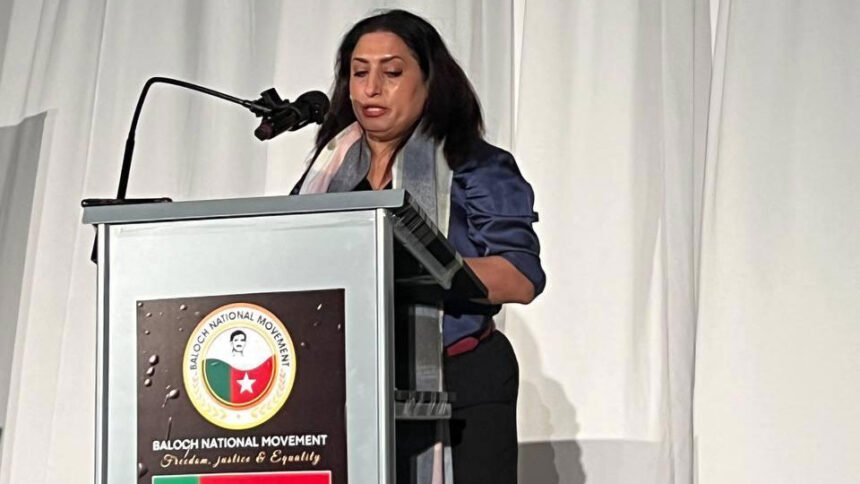
Addressing the BNM seminar, Fahmeeda Khushik, Deputy Organiser of the World Sindhi Congress for the UK and Europe, described Karima Baloch as a leading figure within the Baloch freedom movement. She noted Baloch’s role as former chairperson of the Baloch Students Organization–Azad and said she played a central role in mobilizing Baloch youth around political awareness, self-determination, and resistance to enforced disappearances and extrajudicial killings.
The seminar, organized by the Baloch National Movement (BNM) in London on Saturday, marked the fifth martyrdom anniversary of Baloch leader Banuk Karima Baloch.
“At a time when the Baloch nation was facing systematic militarization, resource exploitation, and cultural destruction, she stood at the forefront,” Khushik stated. She added that Karima Baloch consistently spoke out against illegal occupation, demographic changes, and the denial of basic political and human rights.
Khushik said Karima Baloch later emerged as a global advocate for the Baloch cause, taking the issue beyond Pakistan’s borders and raising it at international forums. “Her leadership sent a clear message that this struggle is not confined to gender, geography, or race,” she said.
According to Khushik, Karima Baloch paid a significant personal cost for her activism, including harassment, threats, and forced exile. She said that despite losing loved ones and being compelled to live abroad, Baloch continued to campaign on behalf of victims of enforced disappearances and families affected by violence in Balochistan.
“Exile did not weaken her resolve,” Khushik said. “She continued speaking for voiceless mothers, disappeared sons, and the silenced graves of Balochistan.”
Referring to the impact of her death, Khushik said, “Her loss is not only a loss for the Baloch nation but also an irreparable loss for the Sindhi nation.”
Karima Baloch was found dead in Toronto, Canada, in December 2020. Khushik noted that her death raised serious concerns among human rights defenders globally, particularly given her profile as a political activist and a vocal critic of the Pakistani state. Canadian authorities later labeled the death as non-criminal, a conclusion that, she said, left many questions unanswered.
“For many, her death symbolized a broader pattern of transnational repression faced by activists from oppressed nations in Pakistan,” Khushik said, referring to cases involving violence, enforced disappearances, and suspicious deaths of political dissidents.
Khushik said Karima Baloch’s legacy continues to inspire resistance and political activism, especially among Baloch women. She stated that Baloch’s life and work encouraged a new generation to organize, speak out, and seek political rights.
Concluding her remarks, Khushik called on participants to reaffirm their commitment to remembering Karima Baloch and continuing the struggle she represented. She said Karima Baloch’s name continues to be invoked in protests against enforced disappearances and in demands for justice and self-determination.

