
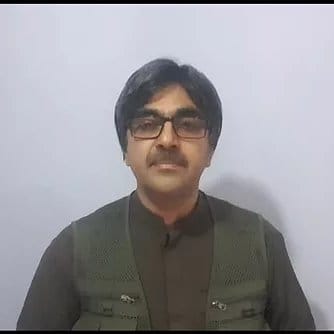
The Central Information Secretary of the Baloch National Movement in a statement on the occasion of the “International Day of Women” said that every year the world observes the “International Day of Women” on 8th march with great intensity. The purpose of celebrating this day is to pay tribute to the historical struggle of women and their rights. While observing a particular day for women and the Women March indicates that humanity requires centuries to gain equality. This is not only a world issue but a humanitarian dilemma for the entire humanity. But, in countries like Pakistan, women march is directionless as well as clueless. It is void of any message, objective and empathy for the women of the oppressed classes. If the motive of the march was women’s rights in a real sense then they would first and foremost raise their voice against state atrocities against the rights of Balochistan’s women. However, we neither see any slogan nor words of sympathy to the women of Balochistan.
He said, historically, Baloch women never experienced gender bias. Men and women share an equal position in Baloch society. If today we are facing gender inequality that is the result of continuous slavery which is rooted in the colonial system of Pakistan. Today, on the eve of the International Day of Women, if we view the position of women in our society then we can see that Baloch women have a prestigious position in Baloch society. Baloch women come from different classes, where tribal tradition has a great role but the status of the Baloch women is never undermined. They share an equal position with man folk. They take charge of the house and attend the guests in the absence of their men. Apart from this, the women also fought wars along with their men. Comparatively to the other neighboring nations, Baloch women enjoy a far better position.
Dil Murad Baloch said that this is the outcome of the positive, progressive, bias-free social behavior of Baloch society where still today women are taking part in the struggle for national liberation.
He added there was hardly any difference between the women’s march and the state narrative because there were no traces of state atrocities and war crimes against Baloch women. Though the women of Baloch, Sindhi, Pushtoon and Mohajir and other minorities came out of the road and protested against the state. Our women had been writing a new history against state barbarism. But today’s scholars worship the state power. Today thousands of Baloch women are active and hundreds of such women had become the victim of state barbarism.
He said that the credit goes to the Baloch women in comparison to other women of the world those who are only struggling for equal rights and atrocities against the patriarchal society. But the Baloch women are doing historical struggle against state atrocities for the release of their men who are arrested and imprisoned.
The entire world is discussing equal rights for women but in occupied Balochistan, it is impossible to draw a comparison between men and women, because both genders are lacking in basic necessities of life such as clean drinking water, education, and health facilities. The root cause of this is not gender bias in our society; rather, it is due to national slavery. Enriched with natural resources the people of Balochistan are lacking life’s basic needs. On one side, the owners of rich land are forced to live a miserable life; on the other side, the military operations in Occupied Balochistan are becoming more prevalent and the women are being targeted, abducted and killed in these military operations. This is due to slavery and exploitation that despite rich in gold, gas, oil, and coal, still Balochistan is counted as one of the least developed regions in the world.
The Information Secretary of BNM said, “the colonial educational system can never be the source of development in a colony. One hand, access to this colonial system of education is restricted, on the other hand, Pakistan is playing ugly tactics to keep Baloch women away for education. A much greater number of army personnel, more than a military camp, are stationed at the University of Balochistan. The state recently installed hidden cameras in the washrooms of women hostels; in order to blackmail Baloch women and keep them away from the education. Despite protests, no one was held accountable for the heinous crime, nor any culprit was identified.
Baloch women have come out on the roads for the release of their men. Banuk Sammi Baloch and Farzana Majeed along with Mama Qadeer marched more than 2500 kilometre from Quetta to Islamabad for the release of their family members and other missing Baloch persons. Unfortunately, despite the promises of the United Nations Organization, the international community took no step nor took any measure to mitigate the worst human right situation in Balochistan. This is a clear fact, the problems of Baloch women will exacerbate without getting rid of national slavery.
