


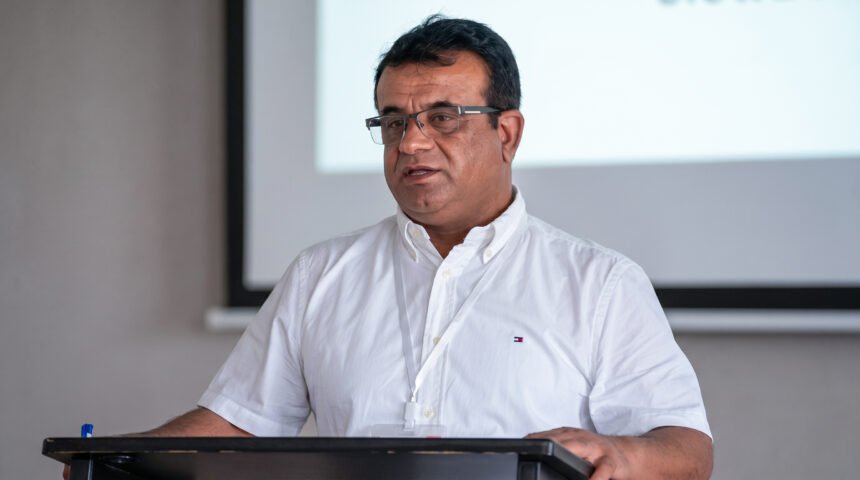
Chairman of the Baloch National Movement, Dr. Naseem Baloch, has said that the abduction of Mahgul Baloch under the cover of darkness at night, brutal torture, gouging out her eyes and killing her, and then dumping her mutilated body behind Turbat University is not a sudden or accidental crime, but a dangerous beginning of extending the state war crimes that have been practiced against Baloch youth for years—abduction, torture, killing, and dumping mutilated bodies—to Baloch women as well. The Baloch nation must consider this a test case because the state wants to see what the possible reaction will be if, after Baloch sons, Baloch daughters are also picked up from their homes, tortured, and their mutilated bodies are dumped under the shadow of military checkpoints. If there is no strong collective resistance against this crime today, this silence will pave the way for the state and its killer army for the next abduction, the next killing, and the next mutilated body.
He said that the available evidence regarding the abduction and killing of Mahgul Baloch points towards the armed groups commonly known in Balochistan as “death squads.” These are not ordinary criminal groups but a regular part of the Pakistan Army and intelligence agencies, which are used to crush the Baloch national movement, terrorize political activists and ordinary citizens, and cover up state crimes. In return, they are provided protection and given a free hand in looting, extortion, and other crimes in society. Therefore, Mahgul Baloch’s killing cannot be described merely as a crime committed by a death squad while absolving the state and the military of responsibility. In reality, the state army has committed this painful war crime through proxy killers.
The Chairman said that this crime is even more horrifying because Mahgul Baloch’s body was dumped in an area where there are numerous military checkpoints, security installations, and an extensive surveillance system. On the one hand, the state has placed every road, village, and small and large settlement of Balochistan under a military siege, and even everyday activities are strictly monitored. On the other hand, within this very siege, the killers abduct a Baloch woman, torture her, kill her, dump her mutilated body, and leave without fear. This incident cannot be presented to the Baloch nation as a failure of security because the killer has left his mark, and the Baloch nation is fully aware of it.
Rather, it is the result of a state system in which the killer and the protector have become different faces of the same power. There must be an independent forensic, medical, and judicial investigation into the killing of Mahgul Baloch, the torture inflicted upon her, and all circumstances surrounding the dumping of her body. Evidence must be preserved, and along with the responsible individuals, their state patrons must also be exposed.
He said that the National Party, along with the so-called nationalist parliamentary parties, cannot absolve themselves of this crime by issuing a few formal statements. Describing Mahgul Baloch’s killing merely as a “deteriorating law and order situation” is a continuation of attempts to absolve the state, for which the National Party provided political justification, legal facilitation, and practical support during its time in government. A party that paved the way for military aggression , enacted legislation in support of state actions, and whose affiliated individuals are still, at various levels, serving as the hands and arms of the same military today—its current superficial rhetoric is not condemnation but political complicity in the crime. Those who call Kech their political centre: the Baloch nation has the right to ask them that if they cannot mobilize the people even over the abduction, brutal torture, and mutilated body of a Baloch woman, then what use are their nationalism, representation, and politics?
Is the Baloch nation alive only to carry the mutilated bodies of its sons and daughters? Although we cannot stop this oppression by force immediately, this by no means means that we should remain silent, conceal the names of the killers, or continue to give time to their political facilitators. Our voice, pen, protest, strike, public gatherings, and organized political resistance are the forces that the state fears, and this is what is called a national movement. And to crush this movement, Pakistan is committing such war crimes.
Baloch society, political activists, students, women, human rights organizations, and the international community must immediately raise a united and effective voice for justice for Mahgul Baloch and for the protection of Baloch women. Picking up Mahgul Baloch’s body and quietly returning home will not make this crime the last crime. Only organized and sustained resistance can send a message to the state that the Baloch will not silently accept the blood of their sons and daughters.
