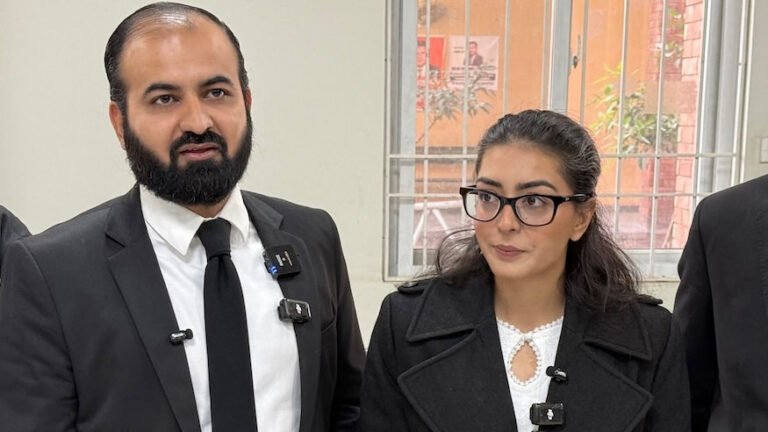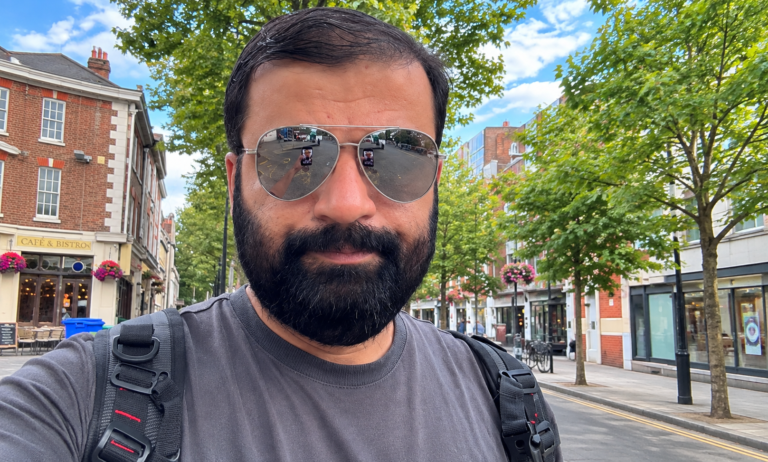
Qazi Rehan
Information and Cultural Secretary, Central Cabinet · Information and Cultural Secretary, Information, IT and Cultural Department · Information and Cultural Secretary, Central Cabinet
Positions
| Position | Body | Term | Preceded by |
|---|---|---|---|
| Information and Cultural Secretary | Central Cabinet | April 25, 2022 – present | — |
| Information and Cultural Secretary | Information, IT and Cultural Department | April 25, 2022 – present | — |
| Information and Cultural Secretary | Central Cabinet | January 1, 2022 – present | Dil Murad Baloch |
| Director | Radio Zrumbesh | January 1, 2015 – January 1, 2016 | — |
| Information and Cultural Secretary | Central Cabinet | January 1, 2008 – January 1, 2010 | — |
| Organiser | Gwadar Zone | January 1, 2007 – January 1, 2008 | — |
Information and Cultural Secretary, Central Cabinet
Jurisdiction: Balochistan
Responsibilities
- Heading and improving the party’s media, publications, and media and cultural institutions
- Publicity for the party
- Heading the Information, IT and Cultural Department and the institutions under its supervision
- Constitutional head of Zrumbesh Publications and the Zrumbesh Broadcasting Corporation
Achievements
- Establishment of the Information, IT and Cultural Department
- Turning the party website into a modern archive
- Giving priority to Balochi and Brahui in the party’s publicity, and starting broadcasts in 11 languages at the same time
- Strengthening the reels and video section, and encouraging unconventional and modern methods of publicity
- A system for the immediate publication of photographs and videos, and the establishment of a separate media network named “Footages”
- A system for collecting data on Baloch martyrs and publishing it continuously on the website under the name “Shahmirani Taak”
- The party’s audio archive, and the publication of audio under the name “Traan”
- Support for the continued publication of Zrumbesh Magazine and of books
- Activating the cultural responsibilities of this office for the first time by appointing a Cultural Coordinator, and establishing a separate body to oversee Baloch cultural and literary activities
Personal and family
He belongs to the Qazi family of the Mirkhanzahi branch of the Baloch Kalmati tribe. His grandfather, Qazi Dad Mohammad Rehan, served as the official qazi in Gwadar under Omani administration. After completing his education in Gwadar, Mulla Mirkhan married Aaziz, the daughter of his teacher Maulvi Dad Mohammad, and named his son Dad Mohammad after his father-in-law; this son later became the founder of the Qazi family. Qazi Dad Mohammad Rehan is among those carrying this scholarly and political heritage forward. He has made a name in Balochi literature in short fiction and criticism, has been associated with several Urdu newspapers and became well known as a columnist.
Family: Father: Qazi Abdul Wahid; Mother: Zulaikha Kalmati.
Lineage (according to “Shajra-e-Kalmati”, page 48):
Qazi Dad Mohammad Rehan son of Abdul Wahid son of Qazi Dad Mohammad Rehan son of Mulla Mirkhan son of Notak son of Hadda son of Bijjar son of Lalu son of Rahmat son of Bijjar son of Kora son of Mohammad son of Jeo son of Malik Zardar son of Malik Mohammad son of Malik Sahak son of Malik Haji son of Mir Notak son of Mir Malik Hali son of Homar son of Bijjar son of Karam Ali Khan son of Balawar Khan son of Hotak (Hot) son of Jalal Khan son of Mohammad Haroon son of Niko Khan son of Chakar Khan son of Jeehand Khan son of Syed Mohammad Khan son of Mir Baloch Khan.
Education and profession
Mass communication; journalism; twice elected unopposed as Secretary of the Gwadar Press Club.
Political career and struggle
Qazi Dad Mohammad Rehan was active in the local politics of Gwadar from his student days. Through school friendships he joined the circle of the Islami Jamiat-e-Talaba and became a rafiq (associate), but he left before becoming a member. In his words, the reason was a change in his religious thinking. As his attachment to the Balochi language grew, he began writing regularly in Balochi alongside Urdu (1999).
While studying in Karachi, he saw advertisements announcing “Gwadar for sale” and feared that his people would be dispossessed of their land. He left his studies unfinished, returned to Gwadar and joined the efforts to raise public awareness. In 2004 he joined the Daily Garaab, where his reporting served the public and gave priority to local language and expression. In 2005 he entered Baloch national politics formally and, alongside Shaheed Ahmed Dad and Shaheed Lala Hameed, helped organise seminars, public meetings and protest demonstrations in Gwadar.
He later joined the united BSO formed by the merger of the BSO factions and was appointed its Deputy Organiser for Gwadar. Before the central session his membership was suspended on the basis of a news report published in the Daily Tawar, for which he was the Gwadar bureau chief. According to him, the decision was taken without hearing his side. The Gwadar Zone did not accept the suspension, after which his supporters, including Lala Hameed, were suspended as well. At the session Bashir Zeb was elected Chairman and the organisation split into three parts. Even after Bashir Zeb announced his reinstatement, he declined to return, saying that he had been a member of the united BSO and would work only on a fresh invitation to join.
In about 2007, during a visit of a BNM delegation to Gwadar, he joined the party and was elected its first Organiser in Gwadar. The party was then in crisis, with its leadership forcibly disappeared or in hiding. Under his leadership the Gwadar Zone emerged as an organised zone.
He gave the slogans of freedom and the political narrative a purely Balochi character, revived words that had fallen out of use and introduced new terms such as “jehdkaar”, although many circles opposed this.
In 2010 he founded an online news website named “Baam Haal”. In 2015 the Zrumbesh Broadcasting Corporation was formally established, and he closed his personal website. In his words, Zrumbesh was not merely a digital radio but a plan to build a complete media in Balochi. In his view, the language of broadcasting should belong to the Baloch of every region. He therefore gave priority to pure Balochi and brought words from different regions into the broadcast language; in his view, this policy was the reason for its success.
Shaheed Dr Mannan used to call him the technical mind of the BNM. He is the creator of the Balochi Nastaliq font, made in the style of the InPage Urdu font.
Achievements and writings
– Founded Zrumbesh Publications and launched the publication of Zrumbesh Magazine.
– Revived the BNM’s welfare organisation, Baloch Kumakkaar, and had it formally approved as a central body by the Central Committee (2008).
– Well-known writer: he writes continuously and is a well-known writer of Balochistan. In the past he wrote extensively in Urdu; now, under the name “Rehan Sassa”, he writes on Balochi language and literature for a limited circle of readers and presents his views on various subjects through podcasts.
Work on the Balochi language:
He prepared a complete outline of Balochi grammar and the first detailed chart of the parts of speech of Balochi. He opposes understanding Balochi through the structures and terms of other languages. Using the phonetic study of Balochi words to understand its grammar, he proposed a modern spelling for certain sounds.
He modernised the Syed Hashmi orthography in use in Balochi on the basis of “separate writing” (juda nawisi). His revised orthography is now used in a wide literary circle.
He was among the early advocates of the campaign to remove non-Balochi (Arabic) letters from Balochi names and words, which he described as a linguistic movement to promote Balochi words. In 2026 he changed his view. According to him, that campaign was an effort of protest and of drawing attention, but continuing it now opens the way for words of other languages to enter Balochi, because every word without the letters peculiar to Arabic (ذ، خ، ع، غ، ف، ق and others) has come to be regarded as Balochi. For example, writing “فوج” (fauj) as “پوج” (pauj) does not make the word Balochi, and “دنیا” (dunya) is not a Balochi word even though it has no letter peculiar to Arabic. His position is that the Arabic spelling of such words should be kept, so that writers recognise them and use Balochi’s own words in their place, for example “لشکر” (lashkar) instead of “فوج” (fauj), and “گیدی” (gēdi) or “جھان” (jahān) instead of “دنیا” (dunya).
In 2021 he submitted a response to the Unicode Script Ad Hoc Committee on the proposal for four new Arabic letters for Balochi (L2/19-320).
He created the Balochi Nastaliq font in the style of the InPage Urdu Nastaliq font; it is used in the typesetting and publishing of Balochi books.
Signature and identifying materials

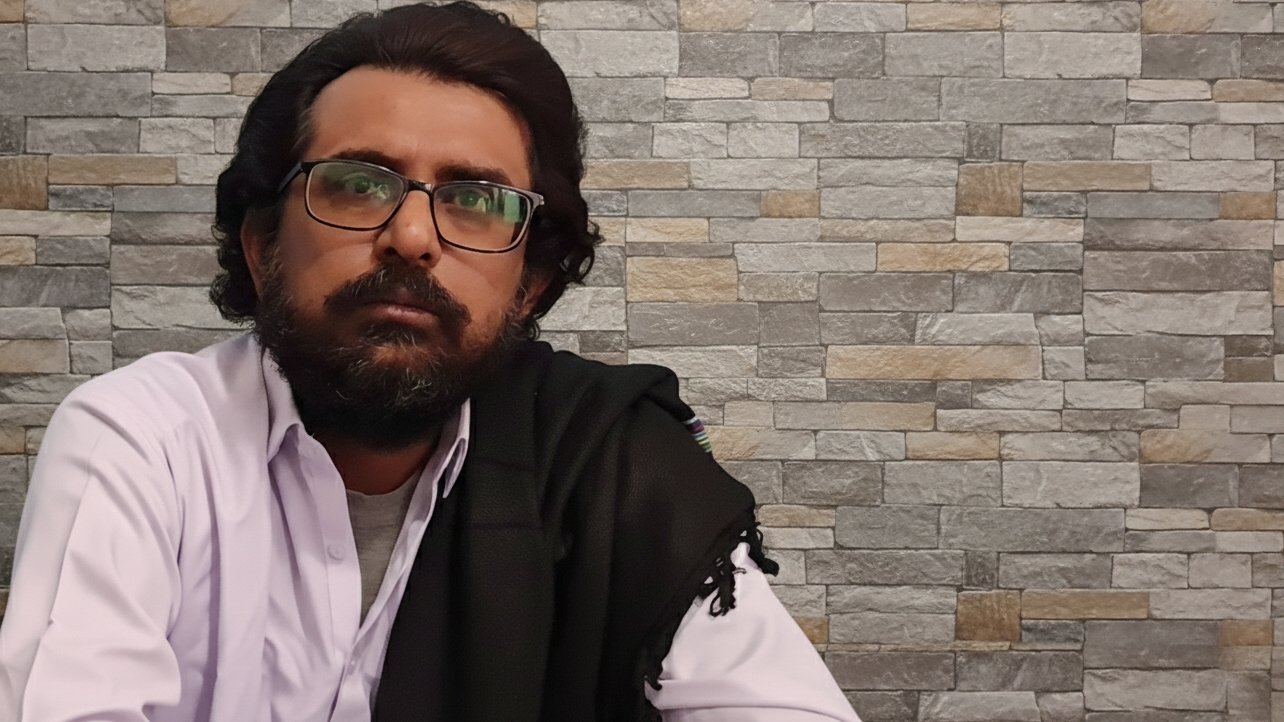
Photo gallery


Timeline
- Took office: Organiser, Gwadar Zone
- Took office: Information and Cultural Secretary, Central Cabinet
- Left office: Organiser, Gwadar Zone
- Left office: Information and Cultural Secretary, Central Cabinet
- Took office: Director, Radio Zrumbesh
- Left office: Director, Radio Zrumbesh
- Took office: Information and Cultural Secretary, Central Cabinet
- Took office: Information and Cultural Secretary, Central Cabinet
- Took office: Information and Cultural Secretary, Information, IT and Cultural Department
Latest activities
No International Investment in Balochistan’s Mineral Resources Will Be Accepted Without the Consent of the Baloch Nation: BNM Spokesperson
The spokesperson for the Baloch National Movement (BNM) has expressed serious concerns over the Pakistan Minerals Investment Forum (PMIF26).