


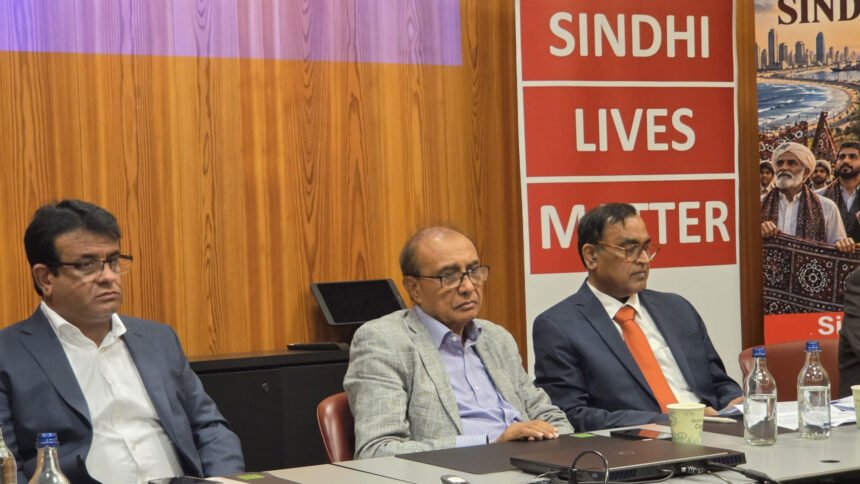
Addressing a conference in Geneva, Baloch National Movement (BNM) Chairman Dr Naseem Baloch said Sindh and Balochistan are not simply two regions on a map. They are the homelands of ancient nations, each with its own history, identity, culture and aspirations. When we speak of their future, he said, we are speaking of millions of people who want to live with dignity, security and freedom in their own land.
He was speaking at an international conference on Sindh organised by the World Sindhi Congress (WSC) in Geneva, where he discussed political and human-rights issues in Sindh and Balochistan and called for solidarity between the two nations.
One of the most painful aspects of the present situation, he said, is the suffering of families whose loved ones have been forcibly disappeared. Sindhi mothers, sisters and families still carry photographs of the enforced disappeared, searching for information and demanding answers.
For the Baloch, Dr Baloch said, this pain is not unfamiliar. “We have seen mothers waiting. We have seen families searching. We have seen generations grow up without knowing the fate of their forcibly disappeared loved ones. That is why the pain of a Sindhi mother is not foreign to us. We recognise it because we have lived through the same suffering.”
Expressing concern over rising religious extremism, he said Sindh is also known as the land of the Sufis. Its cultural heritage has long been associated with spiritual tradition, tolerance, pluralism and coexistence. Today, however, fears over religious extremism and the insecurity of religious minorities are growing. Cases of forced conversion and forced marriages of underage girls have caused deep alarm among human-rights defenders and civil society. These, he said, should not be treated as isolated incidents but understood in their wider political, social and institutional context. Many of these problems arose from the partition of India and the creation of Pakistan.
Many Sindhis migrated to India, he said, while inward migration transformed the demographic, political and economic landscape of Sindhudesh. Indigenous Sindhis still face political marginalisation, economic insecurity and demographic change in their own homeland. Had Partition not taken place and Pakistan not been created Balochistan and Sindhudesh would have been free and sovereign countries.
Addressing political activists, he said national movements must learn an essential lesson: struggle cannot rest on emotion alone. Pain can awaken a nation, but political clarity must guide it. Slogans can inspire, but organisation is needed to turn inspiration into sustained political action. The international environment is changing rapidly; alliances are shifting, global institutions are evolving and new centres of influence are emerging. In this climate, the Baloch and Sindhi nations must ensure that their voices are heard. Their history, grievances and political aspirations must be carefully documented and clearly presented to the world. They must engage international institutions, civil society, parliamentarians, academics, journalists and human-rights organisations. The more clearly the international community understands their history and present realities, the more meaningful global discussion can become.
Stressing the bond between the two nations, Dr Baloch said the Baloch and Sindhi struggles have their own histories, circumstances and forms of resistance. Yet there is also a deep connection between their experiences. They are neighbours. Their histories have been intertwined for centuries. Their peoples have lived through many of the same political transformations. Today they face related questions of identity, political rights, control over resources, dignity, security and the right to shape their own future.
He urged both nations to ensure that future generations inherit not only the memory of suffering, but also the courage to build a future based on dignity, freedom and justice.
