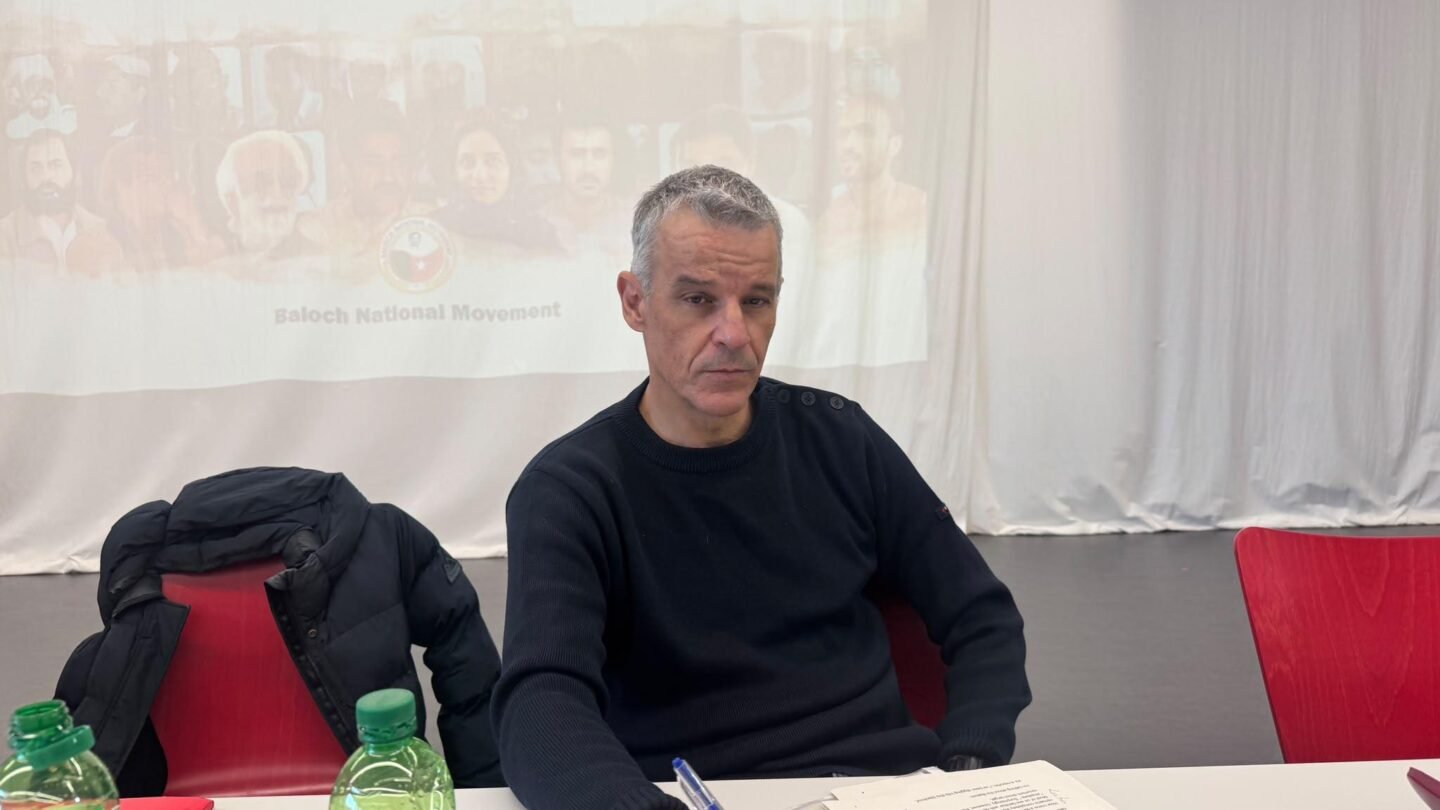
A Spanish journalist who has reported on Balochistan has told a conference in Germany that the region remains almost invisible in the international media despite its strategic location and the severe risks faced by local reporters.
Karlos Zurutuza, speaking in Hannover at a Baloch National Movement (BNM) event marking Baloch Martyrs’ Day, said he can no longer visit Balochistan and that opportunities to meet Baloch people in Spain are rare. He said his aim is to continue covering the region remotely through phone interviews and conferences while trying to explain why it receives so little media attention.
He noted that Balochistan borders Pakistan, Iran and Afghanistan — areas frequently in the news because of the Taliban, Al-Qaeda and other groups — yet the Baloch people themselves, who he described as direct targets of such groups, are largely unknown to the outside world.
Zurutuza said foreign journalists face serious obstacles. He cited cases of New York Times reporters, including Carlotta Gall, who he said was beaten and expelled in 2006, and another reporter expelled after a single story. He added that even if he could return safely, he would hesitate because he does not speak Balochi, Urdu or Farsi and would rely on local fixers and translators who would then be at risk of harassment, imprisonment or worse.
He described the dangers for local journalists, citing the cases of Karima Baloch, who died in Canada after going into exile, and a Baloch journalist found dead in Sweden. He said colleagues have faced financial pressure on editors, direct threats to their families, and self-censorship. Citing Reporters Without Borders, he said Pakistan ranks 153rd on the World Press Freedom Index and that censorship in Balochistan has become bureaucratised, with recent requirements for media to obtain clearance before reporting on security forces. He referred to figures from Freedom Network stating that at least 40 journalists have been killed in Balochistan over the past two decades.
Zurutuza also mentioned the case of Mahrang Baloch, who he said was in contact with him before her arrest and remains imprisoned despite a Nobel Peace Prize nomination.
Rather than making appeals to the United Nations, he said the practical step for journalists is to train local reporters in secure communication methods and build networks so their stories can reach editors who recognise the importance of the Baloch issue. He said he has done similar media training work in conflict zones including Libya, Iraq and Nagorno-Karabakh.