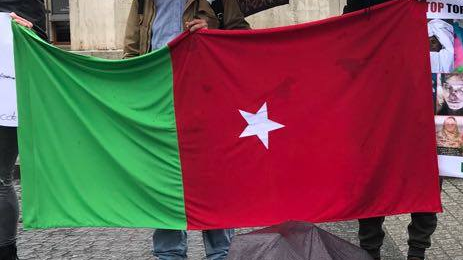
The Baloch National Movement (BNM) organised events at two different locations within the Kech-Gwader Hankeen (zone) to mark Baloch Martyrs’ Day. Speakers described the sacrifices of Baloch martyrs as the price of Balochistan’s freedom and expressed resolve to continue the struggle.
The events were addressed by BNM Kech-Gwadar Hankeen President Baba GR, Hankeen Vice President Bahar Baloch, General Secretary Jehand Baloch, former Central Committee member Yousuf Baloch and others.
Referring to the sacrifice of Mir Mehrab Khan in 1839, the speakers said that oppression against the Baloch has continued from that day to the present, and that the Baloch have resisted it. They said that if one head is sacrificed, more are ready to be sacrificed, and that the land cannot be sold or surrendered under any circumstances. They added that it is because of the blood of the martyrs that Balochistan is loved today, and that martyrdom immortalises a national activist.
They said slavery should not be viewed through the lens of racism. Citing Bhagat Singh, Che Guevara and Nelson Mandela, they said that despite differences in language, land and culture, the pain and the struggle are the same. They stressed that one’s history should be preserved as national capital and passed on to future generations.
The speakers said the martyrs laid a foundation with the wish that the structure would be completed and that this thinking would reach coming generations. They noted that most of the martyrs were people who were well aware of Balochistan’s freedom and became immortal on that path. They emphasised that the foundation of the struggle has been laid firmly and that progress should be made according to organisational principles.
They said the martyrs are like trees that shed blood for the land. They added that today’s generation is conscious and does not retreat from sacrifice because of the pain of the land. They referred to a pledge to the martyrs that they would either be martyred on the same path or free the Baloch homeland.
The speakers said Baloch martyrdom did not begin in 1839; it included the resistance of the Notakis, the political acumen of Sia Sawar, inequality, and the journey of Baloch national formation around Baloch national identity. They said the Baloch resisted in every era for the protection of their land and never bowed their heads. They described the lack of national unity as a major reason for slavery and said that, while avoiding the enemy’s divisive tactics, the war of freedom should be taken to its final destination with unity, courage and bravery.
They said that once this war has been taken upon the shoulders, it must be carried to its destination.