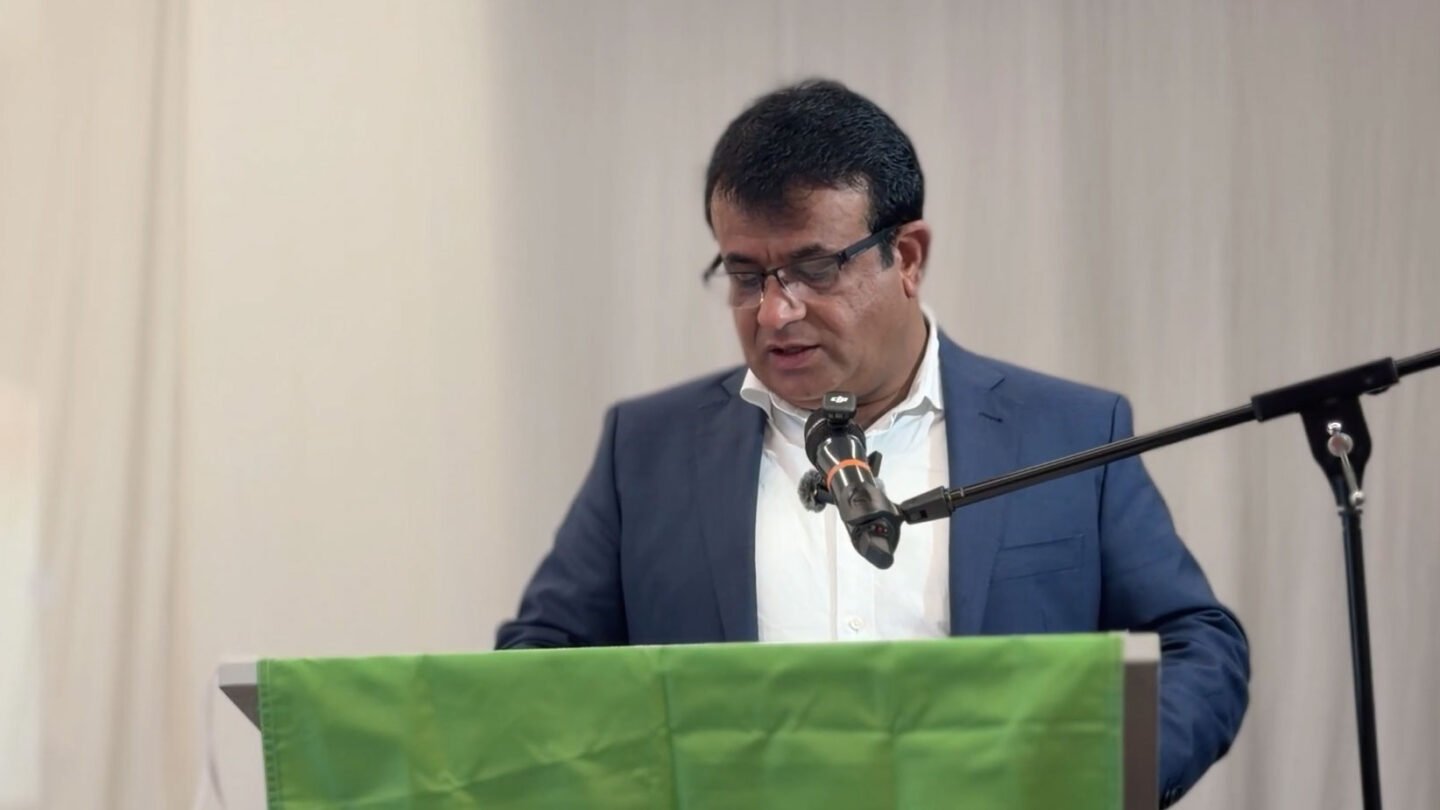
The chairman of the Baloch National Movement (BNM) has told a conference in Germany that the demand for Baloch independence is not only a national issue but a strategic question for the wider region, and has urged Western powers to review their policies towards Pakistan.
Dr Naseem Baloch, speaking in Hannover at a BNM event marking Baloch Martyrs’ Day, said the Baloch right to decide their territory, political authority and collective destiny had been overlooked for generations. He linked the issue historically to 19th-century imperial expansion, the end of colonialism in the 20th century, and the present-day demand for independence contained in the BNM’s political programme.
He described Balochistan as a vast, resource-rich region of strategic importance at the crossroads of South Asia, Central Asia and the Middle East, with traditions of religious tolerance and cultural diversity. Despite this, he said, the political and national rights of the Baloch, including the right to self-determination, had consistently been ignored in the regional strategies of global powers.
Baloch argued that Western support for Pakistan during the Cold War, and later the sponsorship of religious militant groups after the Soviet intervention in Afghanistan, had produced consequences far beyond Afghanistan. He said ignoring the Baloch national question had been a fundamental political and strategic failure of Western policies, and that continued neglect would not serve Western interests.
He presented the BNM’s position that an independent, secular, democratic and sovereign Balochistan could contribute to regional cooperation, economic connectivity and political balance between South Asia, Central Asia, the Middle East and beyond. This vision, he said, rested not only on geography and resources but on a commitment to a democratic and secular system rooted in respect for human rights and Baloch historical traditions.
He called on Western powers to stop treating the Balochistan issue merely as Pakistan’s internal affair and to recognise the Baloch National Movement as a serious political actor.
Turning to the organisation’s own history, Baloch said the BNM’s journey had never been easy. He recalled the loss of leaders and activists, including former chairman Ghulam Mohammed and Central Committee member Dr Abdul Rashid Baloch, as well as arrests, enforced disappearances, exile and political pressure. He stressed that the history of a political party includes the work of ordinary activists who maintained organisational links under difficult conditions, and that democratic maturity is shown in leadership transitions, respect for members’ views and the evaluation of past policies. Differences of opinion, he said, should be treated as opportunities for improvement when resolved through the party’s democratic procedures.
He concluded by underlining the need to strengthen organisational institutions, fulfil responsibilities seriously and respect collective decisions.